
Artificial intelligence and digitalisation for energy
Published on 05.11.2025
About this publication
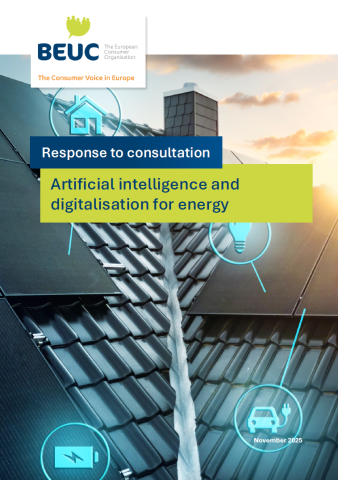
Energy systems are increasingly connected with digital tools and automation becoming more common in consumers’ homes. This digitalisation can be beneficial to consumers. It can help make their energy system more efficient and as consequence lower their energy bills. For example, in order to be able to fully benefit from the advantages of a flexible system , consumers need to have access to digital tools and services that provide real time data. Also, the proliferation of online comparison tools and switching services can help consumers finding an offer that better suits their needs and to switch provider quickly.
Digitalisation can also contribute to the green transition by making it easier for consumers to use and share renewable energy. Consumers with solar panels will benefit from digitalisation as it will help them to optimise the use of electricity generated and, for instance, share the surplus with neighbours.
However, the spreading of digitalisation and AI in the energy sector also comes with important shortcomings that consumers need to be protected from. The misuse of digital tools can undermine consumers’ fundamental rights to privacy and data protection. Poorly cybersecure smart meters could have an impact on peoples’ finances and even health. The use of AI by energy providers could also result in discriminatory practices. Therefore, while BEUC is supportive of the digitalisation of the energy sector, this can only happen if certain conditions are fulfilled and with a high level of consumer protection.
In the paper, we provide a list of recommendations that EU and national policymakers as well as regulators need to bear in mind when considering the further digitalisation of the energy sector.
Download:
Image
05.11.2025
- PDF Document - 576.67 KB
Available in English