
Latest News
Logo


Press releases
Consumer authorities to investigate nine video games companies over unfair practices flagged by BEUC
Available in
English
Today, the European Commission and the network of consumer protection authorities (CPCNetwork) announced nine coordinated enforcement actions against leading video games companies for suspected breaches of EU consumer law. The actions follow a complaint filed in 2024 by consumer organisations from the BEUC network.

News
As of 31 July 2026, consumers will be able to use their phones, tablets, washing machines, or dishwashers longer thanks to easier repairs.
Position papers
Available in
English
BEUC welcomes the opportunity to provide suggestions to the European Commission’s upcoming Citizens Omnibus, which aims to simplify EU rules so this process improves citizen’s lives concretely when dealing with cross-border situations.
In this document, BEUC focuses mainly on improving the consumer experience in EU cross-border situations. For more recommendations about how the EU can continue improving consumer lives across Member States, BEUC’s view on the Consumer Agenda 2025-2030 is available here.
In this document, BEUC focuses mainly on improving the consumer experience in EU cross-border situations. For more recommendations about how the EU can continue improving consumer lives across Member States, BEUC’s view on the Consumer Agenda 2025-2030 is available here.

Press releases
Available in
English
Today, EU lawmakers agreed to consolidate key air passenger rights with some improvements. Passengers still benefit from strong compensation rights clearly set in the legislation after a decade of negotiations.
Tools
Available in
English
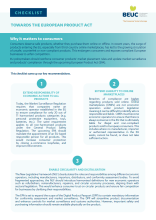
Consumers deserve safe products, whether they purchase them online or offline. In recent years, the surge of products entering the EU, especially from third-country online marketplaces, has led to the growing circulation of unsafe, counterfeit or non-compliant products. This endangers consumers and exposes compliant European businesses to unfair competition.
EU policymakers should reinforce consumer products’ market placement rules and update market surveillance and products’ compliance through the upcoming European Product Act (EPA). This checklist sums up our key recommendations.
EU policymakers should reinforce consumer products’ market placement rules and update market surveillance and products’ compliance through the upcoming European Product Act (EPA). This checklist sums up our key recommendations.
Letters
Available in
English
European consumers deserve clear, enforceable and effective passenger rights. Any rollback would remove concrete protections from millions of Europeans and weaken citizens’ trust in the Union’s ability to deliver tangible rights. At a time when passengers still face frequent delays, cancellations, and complex, often ineffective complaint procedures, current discussions on the revision of the Air Passenger Rights Regulation are moving in this risky direction.

Press releases
The European Commission today published its Passenger Package, an ambitious proposal to encourage consumers to take the train via easier booking and strengthened passenger rights.
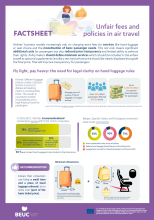
Factsheets
Available in
English
Charging extra for hand luggage, seat selection or cancelling tickets through “no-show” clauses has become standard practice in air travel, significantly increasing the real cost of flying and reducing price transparency for consumers. Millions of passengers across Europe are affected every year.
In this factsheet, BEUC – the European Consumer Organisation – highlights how unfair airline fees and policies harm consumers and undermine their rights. BEUC calls on policymakers to ensure that essential services are included in the basic ticket price, ban unfair seat and “no-show” fees, and introduce clear, standardised EU rules on hand luggage to restore fairness and transparency in air travel.
In this factsheet, BEUC – the European Consumer Organisation – highlights how unfair airline fees and policies harm consumers and undermine their rights. BEUC calls on policymakers to ensure that essential services are included in the basic ticket price, ban unfair seat and “no-show” fees, and introduce clear, standardised EU rules on hand luggage to restore fairness and transparency in air travel.
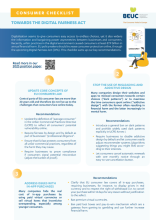
Tools
Available in
English
BEUC's checklist on how the Digital Fairness Act can achieve meaningful change in online consumer protection against unfair commercial practices.
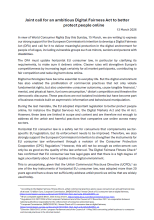
Letters
Available in
English
In view of World Consumer Rights Day this Sunday, 15 March, we are writing to express our strong support for the European Commission’s intention to develop a Digital Fairness Act (DFA) and call for it to deliver meaningful protection in the digital environment for people of all ages, including vulnerable groups such as minors, seniors and persons with disabilities.