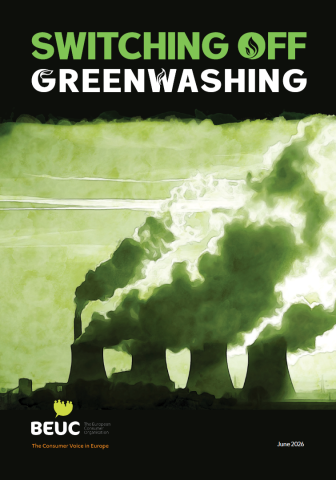

Switching off greenwashing
Published on 16.06.2026
About this publication
Nearly a quarter of energy consumption comes from households, making consumers key actors in the energy transition. Their choices, however, are strongly influenced by information about energy providers’ environmental commitments and the actual impact of energy products. Yet many companies market their offers as environmentally friendly through sustainability claims that obscure which providers are genuinely moving away from fossil fuels, and which options are truly sustainable. This confusion weakens informed decision-making and can deter households from switching to clean, electrified solutions such as heat pumps or solar panels.
Greenwashing slows the transition to sustainable and affordable energy. Continued reliance on fossil fuels exposes households to price volatility and higher bills in uncertain times and challenging geopolitical periods. Misleading claims also allow companies to charge a premium for supposedly ‘green’ products, harming consumers financially and unfairly disadvantaging companies providing more sustainable energy options to consumers and transitioning away from fossil fuels.
For this reason, consumer groups have alerted the European Commission and the European network of consumer protection authorities (CPC-Network) about misleading green claims used by ENGIE, TotalEnergies, Eni Plenitude, and Shell. Our findings show that greenwashing is a systemic issue in the energy sector and warrants a broader examination of environmental claims made by energy traders also operating at domestic level.
In this report, we detail the claims the companies are making, why it is an issue for consumers, and what kind of response we expect from authorities.
Download:
Image