
Joint letter to EVP Stéphane Séjourné on the European Product Act
Published on 07.07.2026
About this publication
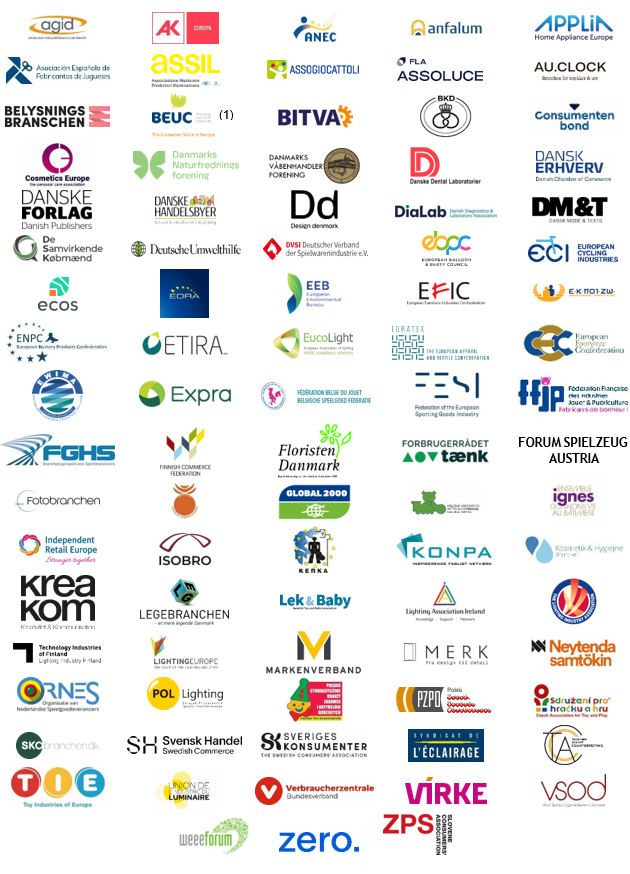
88 organisations, including the European Consumer Organisation (BEUC) have called upon the European Commission's Executive Vice-President Stéphane Séjourné to hold online and e-commerce marketplaces responsible and liable for the products they sell in the upcoming European Product Act.
Full text and signatories below:
Dear Executive Vice-President Séjourné,
Europe is facing an escalating challenge that threatens the integrity of the Single Market, the competitiveness of compliant businesses, and the protection of European consumers and the environment.
The rapid growth of e-commerce has led to an unprecedented surge in direct imports from third countries. In 2025 alone, an estimated 5.9 billion low-value e-commerce parcels entered the European Union. Large-scale EU customs control actions have shown that a significant number of third-country imports do not comply with EU rules. These products, as also demonstrated by studies carried out by some of the signatories to this letter, often breach essential safety requirements, environmental and ecodesign standards, energy-labelling obligations, intellectual property rights, and Extended Producer Responsibility (EPR) requirements.
National market surveillance and customs authorities face increasing volumes with limited resources, making effective checks and enforcement ever more difficult. It is essential to allocate significantly more resources to these authorities and to encourage further cooperation among them. The establishment of a dedicated EU-level enforcement body would also be welcome. However, these measures alone will never be sufficient to address the scale of the challenge.
At the heart of the problem lies a fundamental accountability gap. In many cases, there is no identifiable economic operator established within the European Union who can be held responsible for product compliance or for fulfilling obligations such as participation in EPR schemes.
Online platforms (both EU and non-EU), including but not limited to online marketplaces, social media and live streaming services, have become key gateways through which products from third-country sellers reach EU consumers. Yet, under the current framework, these platforms are treated merely as intermediaries rather than being recognised as economic operators. This significantly limits accountability and leaves enforcement authorities dependent on largely reactive, notice-based mechanisms, resulting in a massive influx of non-compliant products onto the EU market. We welcome the important role of the Digital Services Act (DSA) and the European Commission’s ongoing efforts to enforce it. However, more is needed to address the full scale and structural nature of the problem.
The forthcoming revision of the Market Surveillance Regulation and the New Legislative Framework presents a critical opportunity to address these shortcomings.
The revision of the Union Customs Code is a step in the right direction. It is however understood that the UCC is limited to regulating customs procedures at the point of entry and ceases to apply once goods are released for free circulation. It does not govern products when they are offered for sale or made available on the EU market, nor does it establish a responsible economic operator for market surveillance authorities to engage with after importation. Moreover, release for free circulation is not proof of compliance with EU product legislation; as the UCC itself clarifies, customs clearance should not be understood as evidence of compliance with product safety, ecodesign, energy labelling, or other applicable regulatory requirements.
We welcome the Commission’s stated ambition to take decisive action against the spread of non-compliant products through the forthcoming European Product Act. We hope this ambition will extend to addressing the role and responsibilities of online platforms, which remain at the centre of the current legislative and enforcement gap. Industry, consumer, and environmental organisations have been calling for years for this loophole to be closed, yet all legislative initiatives to date have failed to address it adequately.
Given the scale and urgency of the problem, further delays are not acceptable.
The European Union has established some of the world's highest standards for product safety, sustainability, consumer protection and protection of legitimate businesses as reflected in the EU Charter of Fundamental Rights. However, these standards can only achieve their intended objectives if they are consistently and effectively implemented through legislation and enforced across all sales channels, business models, and products entering the Single Market.
We, a coalition of 88 associations from industry and civil society, therefore, urge you to ensure that the forthcoming European Product Act includes the following:
- For every product placed on the EU market, regardless of its sales channel or country of origin, a clearly identified economic operator must be established within the EU/EEA. This operator must be legally responsible for ensuring compliance with all applicable product, packaging, and Extended Producer Responsibility requirements. Without a responsible actor within EU jurisdiction, enforcement becomes ineffective and EU requirements effectively become optional for overseas sellers;
- Online platforms facilitating the sale of products on behalf of sellers established outside the EU must, before the products are listed for sale to EU consumers, ensure that another economic operator established within the EU/EEA has ensured the compliance of the individual products. If the platform cannot demonstrate that such operator exists, the platform shall be considered the responsible economic operator for the placing of the products on the market;
- Online platforms shall be deemed to be placing products on the EU market under EU product legislation where the conditions set out in Article 6(3) of the Digital Services Act are fulfilled;
- Online platforms shall be recognised as the responsible economic operator whenever there is no other liable economic operator established within the EU/EEA, or where such an operator cannot be identified or traced.
This approach would close a major regulatory loophole, strengthen market surveillance, and create a level playing field between compliant businesses and non-compliant operators.
To preserve the integrity of the Internal Market and ensure fair and effective enforcement, the EU must close the accountability gap in e-commerce and ensure that every product sold to European consumers has a clearly identifiable and responsible actor within EU jurisdiction who has ensured compliance before the product is placed on the market.
(1)

Download:

07.07.2026
- PDF Document - 684.79 KB
Available in English