Latest News
Logo


Letters
Available in
English
ETS2 is an essential part of decarbonising buildings and transport and protecting consumers from future price shocks.
That's why BEUC teamed up as part of a group of 50 civil society organisations, companies, and industry associations in a joint letter to call for an implementation of ETS2 in 2028 with no further delay.
Doing so will allow countries to start using early revenues from the scheme to help the most vulnerable consumers to participate in the energy transition.
This means allowing more people to renovate their home, or to replace their gas boiler with a heat pump.
Deploying these revenues together with Social Climate Plans will also help with the public acceptance of ETS2, while strengthening households' resilience to energy price volatility.
That's why BEUC teamed up as part of a group of 50 civil society organisations, companies, and industry associations in a joint letter to call for an implementation of ETS2 in 2028 with no further delay.
Doing so will allow countries to start using early revenues from the scheme to help the most vulnerable consumers to participate in the energy transition.
This means allowing more people to renovate their home, or to replace their gas boiler with a heat pump.
Deploying these revenues together with Social Climate Plans will also help with the public acceptance of ETS2, while strengthening households' resilience to energy price volatility.
Tools
Available in
English
Although consumers want to move around more sustainably, planning a multimodal or long-distance journey is still an obstacle course, due to difficulties in finding and booking tickets, poor information on connections or lack of passenger rights for those who use several transport modes or travel with different operators.
The European Commission’s Passenger Package can be the ticket to more sustainable travel.
The European Consumer Organisation (BEUC) analyses the proposal and make recommendations on what can be improved from a consumer perspective.
The European Commission’s Passenger Package can be the ticket to more sustainable travel.
The European Consumer Organisation (BEUC) analyses the proposal and make recommendations on what can be improved from a consumer perspective.
Position papers
Available in
English
Consumer-friendly charging is instrumental for the mass adoption of electric vehicles (EVs). As well as binding deployment targets for public charging infrastructure, the EU’s Alternative Fuels Infrastructure Regulation (AFIR) includes important requirements on price transparency and payment methods.
However, despite these requirements, public charging across Europe still has structural problems that undermine consumer trust: an opaque, multi-layered pricing system hindering comparison, billing complexity that makes costs impossible to predict, local monopolies and payment methods that remain inaccessible to many.
BEUC calls on the European Commission and co-legislators to close AFIR regulatory gaps and address the underlying market failures, including market concentration, that keep public charging expensive and difficult to use.
However, despite these requirements, public charging across Europe still has structural problems that undermine consumer trust: an opaque, multi-layered pricing system hindering comparison, billing complexity that makes costs impossible to predict, local monopolies and payment methods that remain inaccessible to many.
BEUC calls on the European Commission and co-legislators to close AFIR regulatory gaps and address the underlying market failures, including market concentration, that keep public charging expensive and difficult to use.
Reports
Available in
English
This policy note is based on an analytical study carried out for Transport & Environment (T&E) and the European Consumer Organisation (BEUC) in the context of the upcoming review of the Alternative Fuels Infrastructure Regulation (AFIR). The objective of the study is to assess how AFIR can better ensure a transparent, predictable and user-friendly charging experience across Europe. The analysis focuses specifically on price transparency, comparability of charging options, and the visibility of all price components before and after a charging session in order to avoid eventual excessive prices.
Reports
Available in
English
Based on the selection of 600 popular and widely available secondhand PHEVs (100 per country) retrieved from major resale websites, this report presents the choice of Plug-in Hybrid Vehicles (PHEVs) offered to consumers on the second-hand market, in six European countries: France, Germany, Italy, Poland, Belgium, and Slovenia. By focusing on countries with strong second-hand car markets, but different tax policies on PHEVs, car segments and average fleet mileage, BEUC identifies the most common PHEV models that enter the used car market and the price trends in different countries.
The full report referenced in this summary can be found here.
The full report referenced in this summary can be found here.
Reports
Available in
English
Consumers currently face a shortage of affordable vehicle options on the market and are compelled to purchase second-hand.
Position papers
Available in
English
BEUC welcomes the opportunity to provide suggestions to the European Commission’s upcoming Citizens Omnibus, which aims to simplify EU rules so this process improves citizen’s lives concretely when dealing with cross-border situations.
In this document, BEUC focuses mainly on improving the consumer experience in EU cross-border situations. For more recommendations about how the EU can continue improving consumer lives across Member States, BEUC’s view on the Consumer Agenda 2025-2030 is available here.
In this document, BEUC focuses mainly on improving the consumer experience in EU cross-border situations. For more recommendations about how the EU can continue improving consumer lives across Member States, BEUC’s view on the Consumer Agenda 2025-2030 is available here.
Press releases
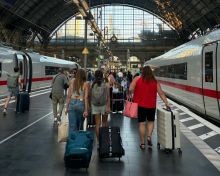
The European Commission today published its Passenger Package, an ambitious proposal to encourage consumers to take the train via easier booking and strengthened passenger rights.
Position papers
Available in
English
The war in the Middle East has triggered another energy shock, with consumers having to pay the price (yet) again.
Since the 2022 energy crisis, the EU has sought to strengthen the resilience of its energy markets, notably by reinforcing consumer protections and diversifying its fossil fuel supply sources.
Despite these efforts, the EU remains highly exposed to external geopolitical shocks and is not yet fully prepared to absorb a crisis of this magnitude.
As prices for consumer goods continue to rise (and are expected to increase further still), BEUC has identified measures that policymakers, regulators and traders should implement in both the short and long term.
In this paper, BEUC, the European Consumer Organisation, has identified measures that policy makers, regulators and traders need to implement, both in the short and long term, to alleviate the financial burden of consumers during this crisis but also to better protect them against future fossil fuel price shocks.
Since the 2022 energy crisis, the EU has sought to strengthen the resilience of its energy markets, notably by reinforcing consumer protections and diversifying its fossil fuel supply sources.
Despite these efforts, the EU remains highly exposed to external geopolitical shocks and is not yet fully prepared to absorb a crisis of this magnitude.
As prices for consumer goods continue to rise (and are expected to increase further still), BEUC has identified measures that policymakers, regulators and traders should implement in both the short and long term.
In this paper, BEUC, the European Consumer Organisation, has identified measures that policy makers, regulators and traders need to implement, both in the short and long term, to alleviate the financial burden of consumers during this crisis but also to better protect them against future fossil fuel price shocks.
Position papers
Available in
English
EU energy and climate legislation sets the pace for decarbonising our economy. Some of these laws contain EU targets. The governance law helps Member States deliver these targets and defines reporting obligations. This should result in consumers benefitting from lower bills, a better quality of life, and a future for our planet. Practically this means more renewable energy, less imports of volatile fossil fuels, continuous efforts to use energy more efficiently, the availability of sustainable products that can be recognised via clear labels, a variety of green mobility choices, and a future where healthy and sustainable foods are accessible and affordable.