
Consumer groups file complaints against Meta, TikTok and Google for failing to protect consumers against financial scams
Published on 21.05.2026
About this publication
On 21 May 2026, BEUC, the European Consumer Organisation – together with 29 members from 27 countries [1] – filed complaints with the European Commission and competent national authorities against Meta, TikTok and Google for failing to address the proliferation of financial fraudulent ads on their platforms as the EU’s Digital Services Act requires from them.
Between December 2025 and March 2026, BEUC and consumer groups across 13 countries reported nearly 900 ads suspected of breaching EU law. Out of these, the platforms took down only 27% of the ads based on these notices, whereas 52% of the reports were rejected or ignored. That means hundreds of financial scams are still active, reaching more than 200 million European consumers every month and risking further financial losses and other harms.
Consumer groups call on the European Commission and national Digital Services Coordinators (DSCs) to investigate the measures taken by Meta, TikTok, and Google to mitigate systemic risks related to financial scam and require them to comply with the DSA. In case of continued non-compliance, the Commission should impose fines.
Agustín Reyna, Director General of BEUC, commented: “Under the Digital Services Act, Meta, TikTok and Google are required to have effective mechanisms in place to fight fraudulent ads and reduce the risks to consumers. Unfortunately, our research shows alarming discrepancies between what these platforms claim to do and the reality of what is happening. In fact, Meta, TikTok and Google not only fail to pro-actively remove fraudulent ads but also do little when being notified about such scams.
“It is essential to hold Meta, TikTok and Google accountable. If they fail to address the financial scams circulating on their platforms, fraudsters will continue to reach millions of European consumers daily, leaving people at risk of losing hundreds to thousands of euros to fraud.”
Read more:
-
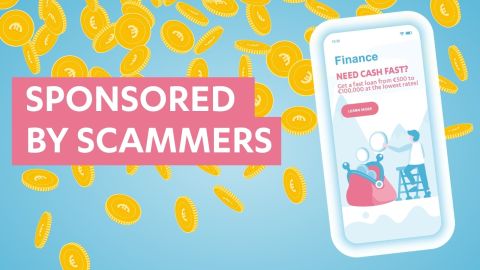
Report: Sponsored by Scammers
The evidence gathered by BEUC and its members adds to the already vast amount of evidence showing that these platforms don't handle this financial fraud ads in a satisfactory manner.
[1] - Consumer groups participating in the evidence-gathering were: Асоциация Активни потребители (Bulgaria), Arbeiterkammer (Austria), ASUFIN (Spain) and Federación de Consumidores y Usuarios – CECU (Spain), Consumentenbond (Netherlands), DECO (Portugal), Federacja Konsumentów (Poland), Forbrugerrådet Tænk (Denmark), Qendra Konsumatori shqiptar (Albania), Que Choisir Ensemble (France), Spoločnosť ochrany spotrebiteľov (S.O.S.) (Slovakia), Verbraucherzentrale Bundesverband – vzbv (Germany), Zveza Potrošnikov Slovenije – ZPS (Slovenia) and BEUC (for Belgium).
In addition, the following BEUC members support the action: ACR Malta (Malta), Asociatia Pro Consumatori – APC (Romania), Consumatori Italiani per l'Europa (CIE) (Italy), dTest (Czech Republic), EKPIZO and KEPKA (Greece), Fédération romande des consommateurs (Switzerland), Fogyasztóvédelmi Egyesületek Országos Szövetsége – FEOSZ (Hungary), Forbrukerrådet (Norway), Kypriakos Syndesmos Katanaloton (Cyprus), Neytendasamtökin - NS (Iceland), Organizacija na potrosuvacite na Makedonija – OPM (Macedonia), Sveriges Konsumenter (Sweden), Union Luxembourgeoise des Consommateurs – ULC (Luxembourg), Unija potrosaca Hrvatske (Croatia), and Vartotojų aljansas (Lithuania).
Download:
Image
21.05.2026
- PDF Document - 115.84 KB
Available in English
Contact Card

Alexandre Biard
Manager, Enforcement, Competition and Consumer rights

Sandra Post
Communications Officer