
Latest News
Logo

Tools
Available in
English
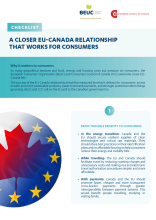
How can a closer EU-Canada relationship deliver for consumers? This Consumer Checklist from BEUC and the Consumers Council of Canada sets out priorities for stronger cooperation on safer products, affordable clean technologies, easier travel, cross-border payments, online consumer protection and the right to repair. This cooperation should be structured through an informal consumer dialogue between Canada and EU officials.
It also calls on the EU and Canada to preserve high food-safety standards, protect digital rights and data protection, support trustworthy AI, remove Investor-State Dispute Settlement from CETA, and ensure transparency and meaningful engagement with consumer organisations
It also calls on the EU and Canada to preserve high food-safety standards, protect digital rights and data protection, support trustworthy AI, remove Investor-State Dispute Settlement from CETA, and ensure transparency and meaningful engagement with consumer organisations

Press releases
Available in
English
From 1 July 2026, all imported goods into the EU will face three-euro customs duties, ending the long-standing exemption for parcels worth under €150. BEUC, the European Consumer Organisation, welcomes the move to improve product safety but warns that consumers must not be hit with unexpected charges when their purchases are delivered.

Factsheets
Available in
English
Consumers shop online daily. The e-commerce business model has risen and so has the flow of non-compliant and
dangerous products entering the EU. With 15 million parcels arriving every single day, customs authorities are at the frontline of ensuring these goods comply with EU law. The EU took action in 2026 and decided to reform its Customs Union. This reform will better equip authorities and ensure that traders worldwide respect EU product safety, sustainability, and other key regulations.
dangerous products entering the EU. With 15 million parcels arriving every single day, customs authorities are at the frontline of ensuring these goods comply with EU law. The EU took action in 2026 and decided to reform its Customs Union. This reform will better equip authorities and ensure that traders worldwide respect EU product safety, sustainability, and other key regulations.

Press releases
Available in
English
The European Parliament has approved the EU’s deal on tariffs with the United States that will apply until 31 December 2029. While not a perfect deal, it helps prevent a damaging tariff war that would have driven up prices and reduced choice for consumers on both sides of the Atlantic.

Press releases
Available in
English
The EU has agreed on a customs reform that will help to stop the flood of unsafe products sold to Europeans from outside the EU. This deal is an important win for consumers, after years of testing by consumer groups of the BEUC network of dangerous toys, textiles, and other products sold on online marketplaces like Temu and Shein.

Tools
Available in
English
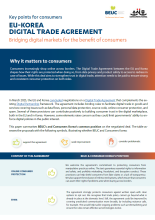
The Digital Trade Agreement (DTA) between the European Union and Korea marks a significant step in shaping consumer rights in the digital marketplace. This agreement addresses key issues such as online consumer protection, data privacy, product safety, and redress mechanisms, aiming to build stronger trust in cross-border digital trade. This paper summarises BEUC’s and Consumers Korea’s common position on the negotiated deal.