
Latest News
Logo

Press releases
Available in
English
BEUC - with 12 member organisations from 11 countries - today filed a complaint with the European Commission and European consumer protection authorities against ENGIE, Eni Plenitude, Shell, and TotalEnergies for misleading green claims.
Position papers
Available in
English
EU energy and climate legislation sets the pace for decarbonising our economy. Some of these laws contain EU targets. The governance law helps Member States deliver these targets and defines reporting obligations. This should result in consumers benefitting from lower bills, a better quality of life, and a future for our planet. Practically this means more renewable energy, less imports of volatile fossil fuels, continuous efforts to use energy more efficiently, the availability of sustainable products that can be recognised via clear labels, a variety of green mobility choices, and a future where healthy and sustainable foods are accessible and affordable.

Tools
Available in
English
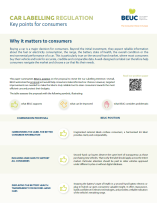
Buying a car is a major decision for consumers. Beyond the initial investment, they expect reliable information about the fuel or electricity consumption, the range, the battery state of health, the overall condition or the environmental performance of a car. This is particularly true on the second-hand market, where most consumers buy their vehicle and look for accurate, credible and comparable data. A well-designed car label can therefore help consumers navigate the market and choose a car that fits their needs.
Reports
Available in
English
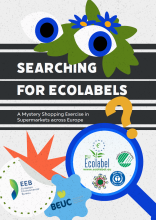
People care about the impact of what they buy. But how easy is it to find sustainable products across Europe? We ran a mystery shopping exercise in 13 countries to find out.
Position papers
Available in
English
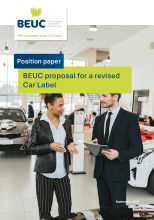
To make a well-informed choice when buying a car (new or second-hand), consumers need clear and accurate information about a car’s real-world fuel or electricity consumption, its overall environmental impact or incentives available in their country. With many new models and powertrains available along with evolving purchase habits, current EU rules adopted in 1999 and are now completely outdated.
Letters
Available in
English
BEUC letter to European Commission President Ursula von der Leyen reiterating consumer groups’ position that the Green Claims Directive is essential to build consumer trust in markets.
Press releases
The European Commission today presented its Water Resilience Strategy, the aim of which is environmental protection, competitiveness and to secure clean and affordable water and sanitation for all at all times, and empowering citizens for water resilience. BEUC very much welcomes this action plan as much bolder action is needed to restore and protect the water cycle, to eliminate harmful chemicals, make agricultural practices more sustainable and invest substantially in the EU’s water infrastructure.
Press releases
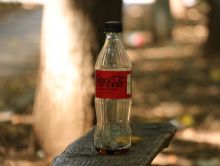
The European Commission announced today that Coca-Cola has agreed to change some of its labelling practices, following a complaint for greenwashing that BEUC and its members lodged in November 2023 to European consumer authorities, with the support of Client Earth and ECOS. Today’s announcement is the first company commitment since BEUC’s complaint was filed.